
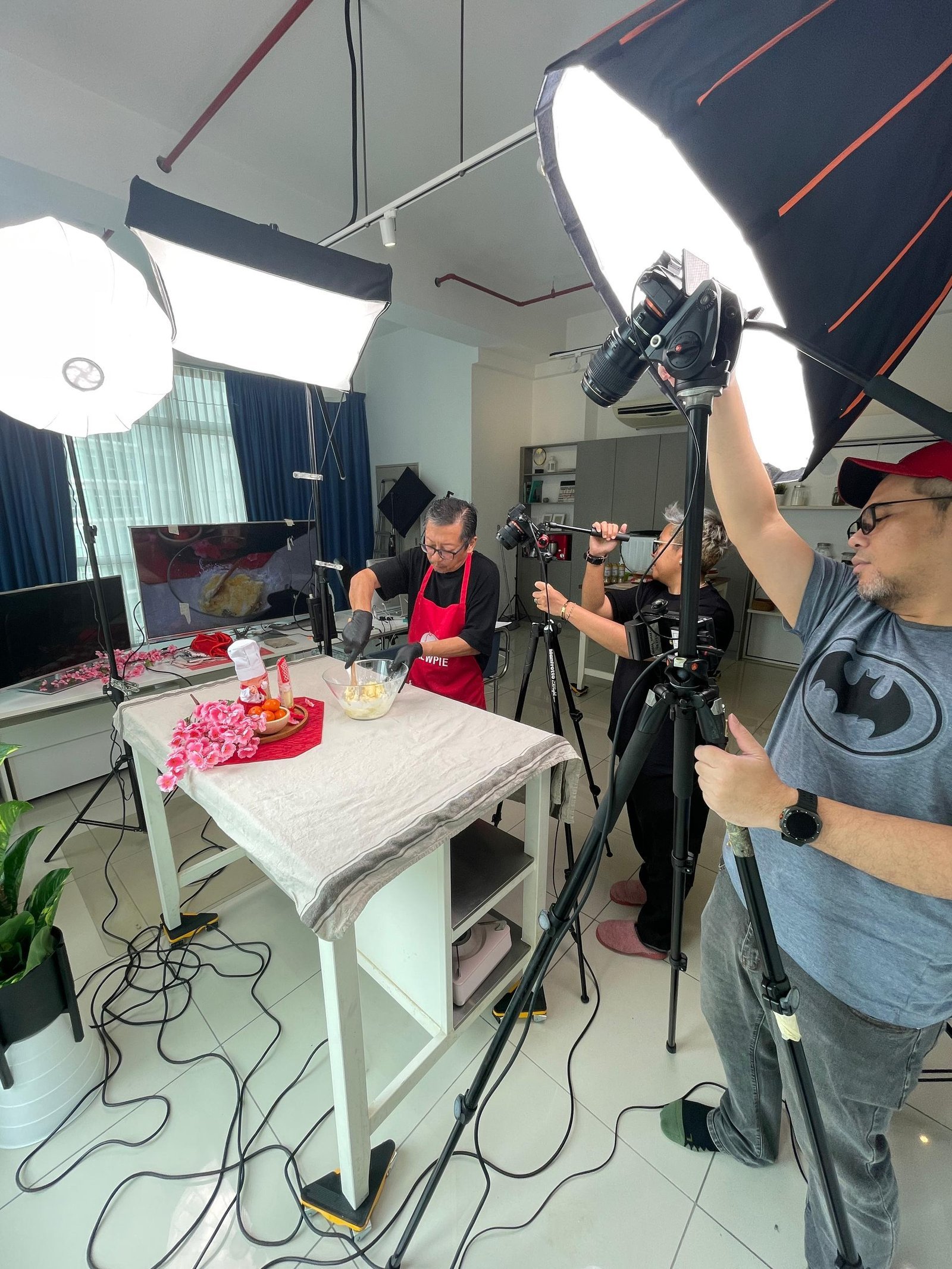
A request for “three food videos” leaves plenty unanswered. Are they recipe tutorials, creator-led demonstrations or paid ads? Must the product label remain visible? Will the same footage be needed in vertical and landscape formats?
A useful brief resolves those questions before cameras arrive. For food video production in Malaysia, it also needs to reflect the audience’s language, cooking habits and the way the product is sold.
Start with one business objective
Decide what the viewer should understand or do after watching. A new ingredient may need an introduction. An established sauce may need fresh serving ideas. A campaign linked to an online store may need a clear reason to visit the product page.
Write that objective as a sentence: “Show busy home cooks how this paste fits into a weekday dinner.” Then define the audience, main platform and intended next step. This gives the producer a basis for recommending the recipe, opening shot and length.
Explain the food and the product’s role
Include the exact product variant, pack size, approved packaging and any information that must be shown accurately. Specify whether recipe development and testing are part of the assignment. A reference video can communicate a mood, but the team still needs a recipe that works with your actual product.
For Malaysian audiences, identify whether Bahasa Malaysia, English or another language is needed for speech and captions. Clarify unfamiliar ingredient names and substitutions. Give the team approved factual claims instead of expecting the presenter to improvise them.
List the deliverables individually
Separate the main video from its cutdowns and stills. “One shoot” does not automatically include every edit, language version or photograph that could be made from it.
- Main edit: format, intended duration, platform and language.
- Shorter edits: how many and what each should communicate.
- Captions: burned-in text, separate subtitle files or both.
- Still images: finished dishes, pack shots or behind-the-scenes photos.
- Audio: voice-over, presenter sound and music requirements.
- Delivery: final files, deadlines and any agreed source-file handover.
Where several formats are required, discuss framing before the shoot. A composition designed only for a wide screen may lose the product or the cook’s hands when cropped vertically.
Plan the shots that prove the message
A simple shot list should cover the finished dish, ingredients, key cooking steps, product use and serving moment. Highlight the action that makes the recipe understandable: a sauce thickening, a dough reaching the right texture or the amount of seasoning added.
Consider how the footage will sound too. If the campaign depends on a presenter explaining the method, allocate time and equipment for clear speech. If cooking sounds are part of the idea, capture them deliberately.
Understand what changes the production cost
Compare proposals against the same scope. Recipe testing, studio time, food styling, ingredients, props, talent, crew size and editing all affect the quote. So do language versions, extra formats, revision rounds and tight delivery timelines.
Instead of asking only for a lower total, identify your priorities. A small series using one location and compatible recipes may be more practical than several unrelated concepts. Ask what preparation, revisions and reshoots are included and what would require an additional quote.
Agree on usage and approvals before filming
Set out where the finished content may appear, for how long, and whether it will be used in paid advertising. Confirm that talent, music and other third-party assets cover those uses. If the brand needs raw footage or editable files, include that explicitly in the scope.
Nominate one person to consolidate feedback. Agree on approval stages for the concept, recipe, script and edit. Changing the product claim after the shoot can be much more disruptive than correcting it in the script.
A briefing checklist to copy into your next project
- Objective, target audience and intended viewer action.
- Product details, approved claims and recipe requirements.
- Platform, language, visual references and essential shots.
- Itemised deliverables and usage requirements.
- Budget range, shoot date and delivery deadline.
- Named approver, feedback deadlines and revision allowance.
- Success measures and plans for publishing the content.
Before signing off, ask whether someone unfamiliar with the campaign could understand the brief without a meeting. If not, add the missing detail. For ideas grounded in audience needs, read our guide to creating food content around TikTok search questions.
Have a product and a production deadline? Send iCookAsia Digital your brief to discuss a practical food video production plan.
Leave a Reply